Home · Blog · Strata, safety and insurance
Fire safety, pool barriers and insurance for Australian holiday rentals and motels

Elena Sitki · operations at GreenSLO and public relations for ReceptionGO
Published 2 November 2026 · 8 min read
General information, not legal, tax or insurance advice. Check your own case with your council, the ATO or the state revenue office, or an accountant. Rates and dates below were checked on the date shown — recheck the linked official page before you lodge, register or set a price from them.
NSW makes you declare interconnected smoke alarms and an evacuation diagram when you register. Queensland pool certificates last two years for a house pool and one year for a shared pool. A normal home policy often excludes paying guests. Tell the insurer. A platform guarantee is not a substitute.
We set up online check-in, payments and door codes with you, free. →
The booking is the easy part. The questions that arrive after a bad night are dull and expensive: were the alarms interconnected, did the pool gate close, and did the policy know these people were paying to be here? State registers check some of that. Insurers check the rest, usually after the event, which is a poor time to discover an exclusion.
Fire: NSW writes it down, everyone else still has a duty
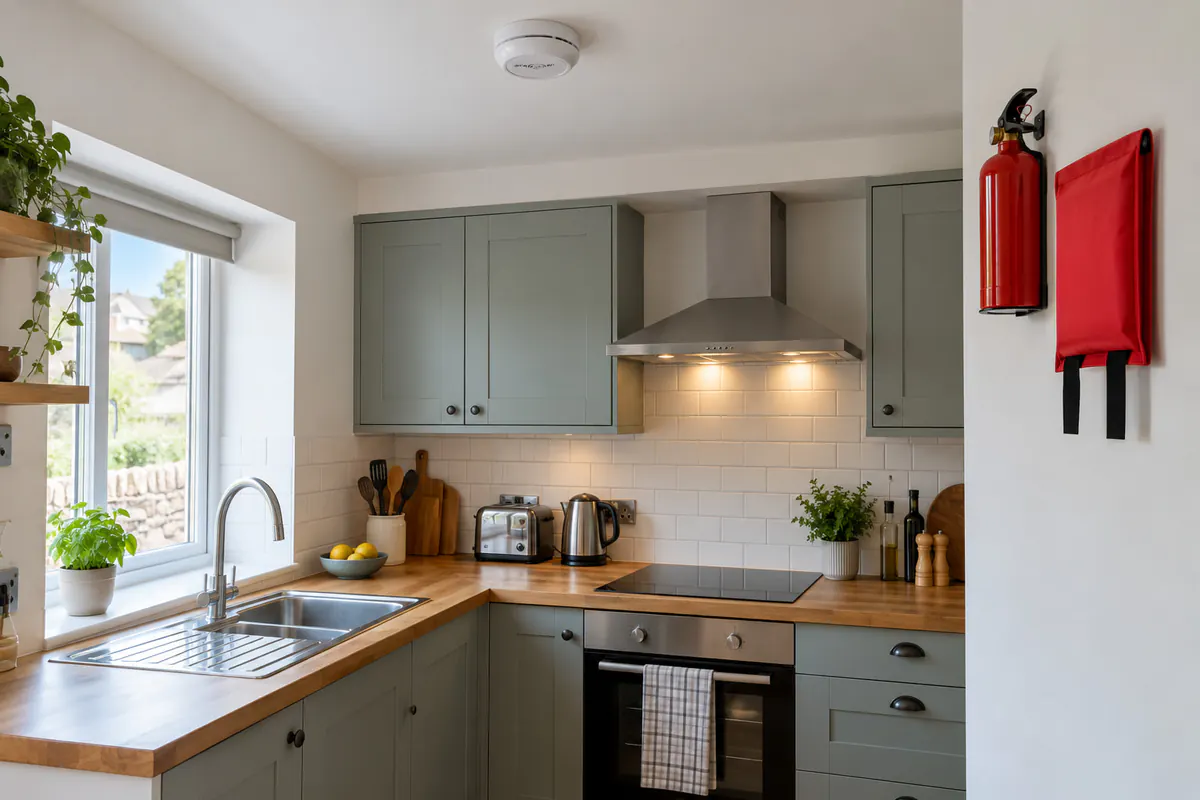
NSW is the state that turned fire safety into a registration tick. The standard is specific. Smoke alarms to AS 3786, on or near the ceiling, mains or a sealed 10-year battery, interconnected (wireless is allowed), in the bedroom circulation space and on other storeys. An evacuation diagram, at least A4, dated, mounted at a set height, at the entrance and in each bedroom, with 000 on it. A heat alarm interconnected to the house alarms where a secondary dwelling sits over a garage — the “Fonzie flat” case — and not, the government’s own clarification says, in the garage of an ordinary house. Units in class 2 and class 4 buildings add the keyless exit, the extinguisher and the fire blanket.
You declare it. The FAQ says no formal certificate is uploaded. That is not the same as “nobody will look”. The council monitors the standard, and a penalty notice exists in the regulation for non-compliance. Print the standard, not a blog table, and walk the dwelling with it. The registration context is in the NSW register guide.
Other states have not copied that exact standard, which does not leave a motel or a B&B without duties. Building classification, essential safety measures in a class 3 building, and the insurer’s survey still apply. A holiday park with cabins and a hostel with bunks are commercial buildings. Treat a downloaded “Airbnb alarm checklist” from another country as a prompt, not as your compliance.
Bushfire is its own map. The NSW material points hosts at the Rural Fire Service hazards app. If the property is in a bushfire-prone area, the evacuation diagram needs a destination that is not “drive towards the smoke”. Say so in the check-in message, not in a laminated card nobody sees at midnight.
Pools: the gate is the rule
Queensland’s pool safety standard is MP 3.4. It applies to pools at homes and at short-term buildings, including hotels, motels and resorts. A certificate is how you show the barrier complied on the day an inspector saw it. QBCC’s current periods are one year for a shared pool and two years for a non-shared pool. Class 3 properties may use an approved pool safety management plan instead of relying only on a barrier. Noosa will not take a short-stay application seriously without the certificate where there is a pool — see Queensland short-stay letting.
NSW, Victoria, WA and the other states have their own barrier rules and their own inspection trades. We are not collapsing them into one national certificate that does not exist. The operational rule is the same: a gate that a guest props open is how children end up in the water, and it is how claims start. Put “gate closed” in the house rules the guest accepts, and in the changeover list the cleaner signs off. The arrival flow is in online check-in.
Insurance: tell them, then read what they send back
A home and contents policy bought when the house was a weekender often excludes business use, paying guests, or theft where there is no forced entry. Short-stay and holiday-rental policies exist because of that gap. Public liability is the section that matters when a guest is injured, as distinct from the section that replaces a burnt kitchen. Lenders and strata committees sometimes ask for a liability figure. Get that figure from them and from the insurer, not from a round number in a forum.
Tell the insurer the truth about the channels, the key safe or the smart lock, and whether the property is vacant between stays. A lock that issues a code per booking is easier to explain than a key safe whose code has been in twenty message threads. Model choice is covered in the general guide to smart locks. The bond you take for damage is not insurance; it is a small buffer, and the rules for taking it fairly are in bonds and cancellations.
Platform guarantees change name and terms. They are not a policy of insurance in your name. Keep them as a backstop for a stained mattress, and keep a real policy for everything else.
A record that is enough, and not a filing cabinet of passports
There is no Australian equivalent of filing a guest card with the police the way some European countries require. What you do need is the ability to say who was in the property when something happened. Online check-in does that without a night manager. It also stops you collecting identity documents “just in case” and then leaving them in an email folder forever. The OAIC explains the small-business provisions of the Privacy Act; the turnover figure people quote is $3 million, and there are exceptions. Recheck it. The safer habit does not depend on the exemption: collect what the stay and a dispute need, restrict who can see it, delete it when the dispute window has passed.
Motels, hostels and holiday parks already think this way, because a reception book is an old habit. The version without a night clerk is in motels, B&Bs and caravan parks. WA’s register, for comparison, does not inspect your alarms before it issues a number — see the WA register. The alarms are still your job.
Frequently asked questions
What smoke alarms does an NSW holiday rental need?
The STRA fire safety standard requires smoke alarms complying with AS 3786 in every corridor or hallway associated with a bedroom (or between the bedrooms and the rest of the dwelling) and on every other storey. They are mains-powered or have a non-removable 10-year battery, and they are interconnected if there is more than one. You also post an evacuation diagram. In a class 2 or class 4 unit you add an entry door that opens from inside without a key, a fire extinguisher and a fire blanket in the kitchen. You declare this on the register. You do not upload a compliance certificate. The council enforces.
How long does a Queensland pool safety certificate last?
QBCC says one year for a shared pool and two years for a non-shared pool. Pool safety laws apply to pools at residential buildings, including hotels, motels, resorts and other short-term accommodation. Class 3 buildings can use a compliant barrier or a pool safety management plan approved by QBCC. Noosa asks for a current certificate with the short-stay application. A certificate that ran out in October is not “close enough” for a Christmas booking.
Does my home insurance cover Airbnb guests?
Often it does not. Many home policies exclude loss where the home is used for paying guests, or exclude theft without forced entry when a key has been shared. The only reliable step is to tell the insurer you take short stays and to read the schedule that comes back: public liability, building, contents, and any condition about locks or key safes. We are not quoting a premium or a required liability limit, because those are the insurer’s. Ask what they need in writing.
Is AirCover or a platform guarantee enough?
No. A platform programme is the platform’s current terms, it changes, and it is not a policy in your name with a limit your body corporate or your lender recognises. Keep your own policy. Read the platform terms for what they actually pay, and assume a serious injury will be larger than a broken lamp.
Do I have to keep a copy of the guest’s passport?
Australia does not have a European-style hotel guest register that you file with police. Collect what you need for the stay and for a damage dispute — name, contact, and ID if you have a reason — and do not leave passport images in a shared inbox. The Privacy Act’s small-business exemption is commonly described as applying under a $3 million turnover, with exceptions. Recheck the OAIC page before you rely on the exemption. Holding less, for less time, is the practice that survives either way.
Free help with setup
We connect Booking.com, Airbnb, Expedia and Stayz, Stripe and smart locks with you, and set up the check-in page. The first 30 days cost nothing, and setup help is always free.
Start freeSources
- NSW Planning — STRA fire safety standard
- NSW Planning — STRA framework FAQ, fire safety declaration
- Queensland Government — Pool safety laws
- QBCC — Inspect and certify a pool
- Noosa Shire Council — pool and smoke-alarm evidence on a short-stay application
- OAIC — Small business and the Privacy Act
Rules last checked on 22 October 2026.