Home · Blog · Safety and guest records
The guest register in the UK: what hotels, B&Bs and holiday lets must record under the 1972 Order

Sergej Sitki · founder of ReceptionGO and host
Published 21 October 2026 · 9 min read
General information, not legal or tax advice. Check your own case with your local council, HMRC or the relevant revenue authority, or an accountant.
Under the Immigration (Hotel Records) Order 1972, anyone providing paid accommodation in the UK — hotels, B&Bs, hostels and holiday lets — must record the full name and nationality of every guest aged 16 or over. Guests who are not British, Irish or Commonwealth citizens must also give their passport number, place of issue and next destination. Keep the record for 12 months.
We set up online check-in, payments and door codes with you, free. →
Most UK hosts have never heard of the Immigration (Hotel Records) Order 1972. It is short and old, and it is still in force. Every hotel and guest house keeps a register because of it; many holiday let owners do not, until an immigration officer or the police ask who stayed on a particular night. Here is what the Order asks for, who it applies to, and how to meet it without becoming a collector of passport photocopies.
Who the Order applies to
Article 3 is broad: any hotel or other premises, whether furnished or unfurnished, where lodging or sleeping accommodation is provided for reward. That covers:
- hotels, motels, inns, guest houses and B&Bs;
- hostels and bunkhouses;
- holiday lets, serviced apartments and rooms let on Airbnb, Booking.com and Vrbo;
- holiday parks, glamping sites and other places where guests sleep for payment.
Premises certified as schools, hospitals, clubs and similar institutions are excluded. It applies in England, Wales, Scotland and Northern Ireland alike.
What you must record
| Guest | On arrival | On or before departure |
|---|---|---|
| Everyone aged 16+ | Date of arrival, full name, nationality | — |
| Plus, if they are an “alien” | Number and place of issue of passport, certificate of registration or other ID showing identity and nationality | Next destination and, if known, the full address there |
An alien here means someone who is not a British citizen, a Commonwealth citizen or a citizen of Ireland. So a family from Germany or the United States gives passport details; a couple from Australia, Canada or India gives name and nationality only. Children under 16 are not recorded under the Order, although you will want to know how many there are for safety and occupancy.
As the keeper you must require guests to give the information, and keep a written record for at least 12 months, open to inspection at any time by the police or anyone authorised by the Home Secretary. A digital record counts as “in writing”.
Why it matters more now
- Self check-in means many hosts never meet guests at all — so nobody asks for a name, let alone a passport.
- Registration and licensing in Scotland, Wales and soon England put holiday lets on councils’ radar; police and immigration enforcement use the same data.
- Exploitation and county lines investigations have made short-term lets a focus for police, who ask hosts for guest records more often than before.
Doing it under UK GDPR
The Order gives you a legal obligation as your lawful basis for the fields it lists. Anything beyond them needs its own reason. Practical rules:
- Collect what the Order asks for — plus contact details and anything you genuinely need to run the stay, such as date of birth for age checks.
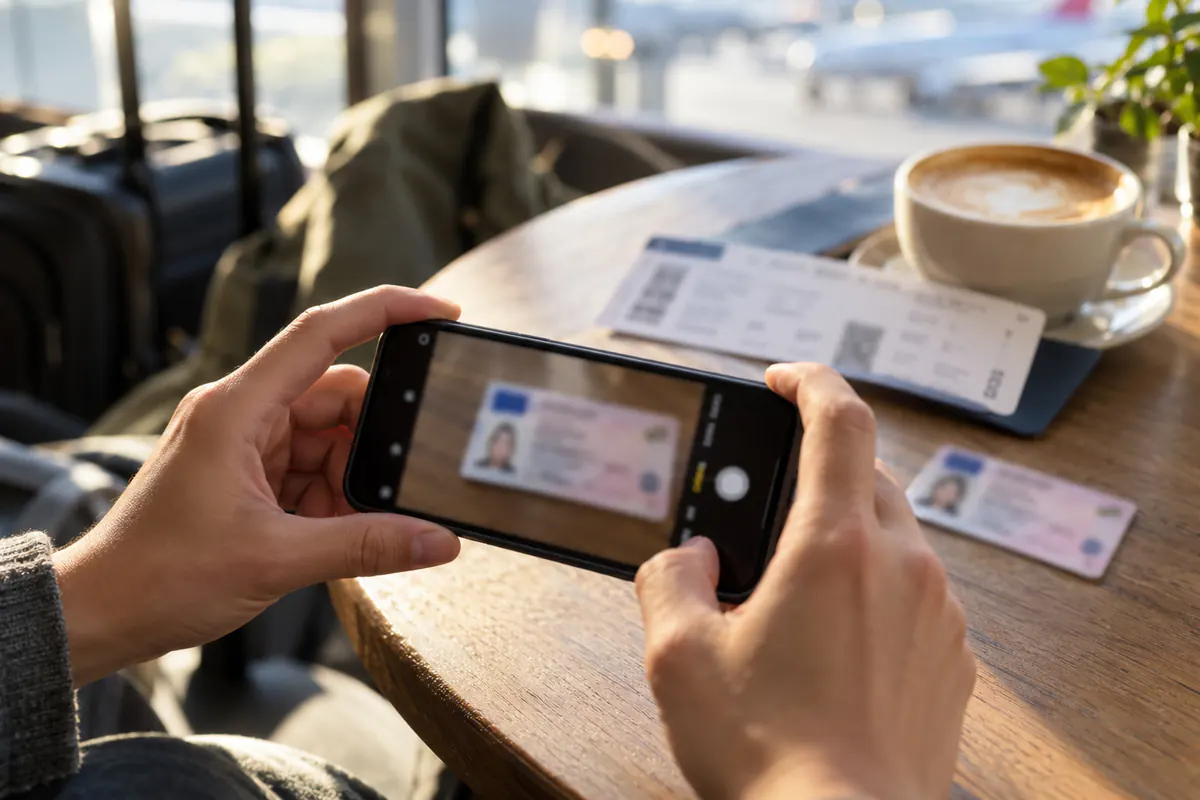
- Avoid passport photocopies in email, WhatsApp or the camera roll. If you scan a document, extract the fields and do not keep the image longer than needed.
- Tell guests why: a short privacy notice at booking or check-in explaining the legal duty.
- Set a retention period — 12 months plus a margin — and delete afterwards.
- Secure it: access only for the people who manage bookings, not a shared spreadsheet link.
A process that does not depend on meeting the guest
For a staffed hotel the register is a form at the desk. For a holiday let with a key safe or smart lock, it has to happen before arrival:
- Send each booking a check-in link a few days before arrival — by the booking channel’s chat, email or WhatsApp.
- Each guest aged 16+ enters their details or scans their document. Ask overseas guests for their next destination in the same form.
- The door code goes out only when everyone in the party has checked in.
- The record is kept with the booking, searchable, for the retention period.
Our self check-in guide for UK holiday lets covers the rest of that flow — keys, codes and arrival messages. For the European equivalent, where hosts must report every guest to the police, see guest registration and police reporting in Europe.
Frequently asked questions
Do Airbnb hosts have to keep a guest register?
The Order applies to “any hotel or other premises, whether furnished or unfurnished, where lodging or sleeping accommodation is provided for reward”. A holiday let or a room let on Airbnb is premises providing sleeping accommodation for reward, so the same duty applies.
Do I need passport details for every guest?
No. Everyone aged 16 or over gives their full name and nationality. Passport (or other ID) number and place of issue, plus their next destination, are needed only from “aliens” — people who are not British citizens, Irish citizens or Commonwealth citizens. An American or EU guest is in that group; an Australian or Canadian is not.
Can I photocopy guests’ passports?
The law requires you to record certain details, not to keep a copy of the document. Under UK GDPR you should collect only what you need. Storing images of every passport in a phone gallery or email inbox is the risk the ICO warns about. A scan that extracts the fields and is then deleted is the safer approach.
How long do I have to keep the records?
At least 12 months from the guest’s arrival. Keeping them much longer needs its own reason under UK GDPR — such as an open dispute or a chargeback — so set a retention period and delete after it.
Who can inspect the guest register?
Any police constable and anyone authorised by the Home Secretary, at any time. In practice that means a police officer or an immigration officer during an investigation or a compliance visit.
What is the penalty for not keeping a register?
Failing to comply is an offence under section 26 of the Immigration Act 1971, punishable on summary conviction by a fine and up to six months’ imprisonment.
Free help with setup
We connect your channels, Stripe and smart locks together with you and set up the check-in page. The first 30 days cost nothing, and setup help is always free.
Start freeSources
- The Immigration (Hotel Records) Order 1972 (SI 1972/1689)
- British Nationality Act 1981, section 50 — definition of “alien”
- Immigration Act 1971, section 26 — general offences
- ICO — Guide to the UK GDPR: lawful basis, data minimisation and storage limitation
- ICO — Video surveillance (including CCTV) guidance
Rules last checked on 15 October 2026.